
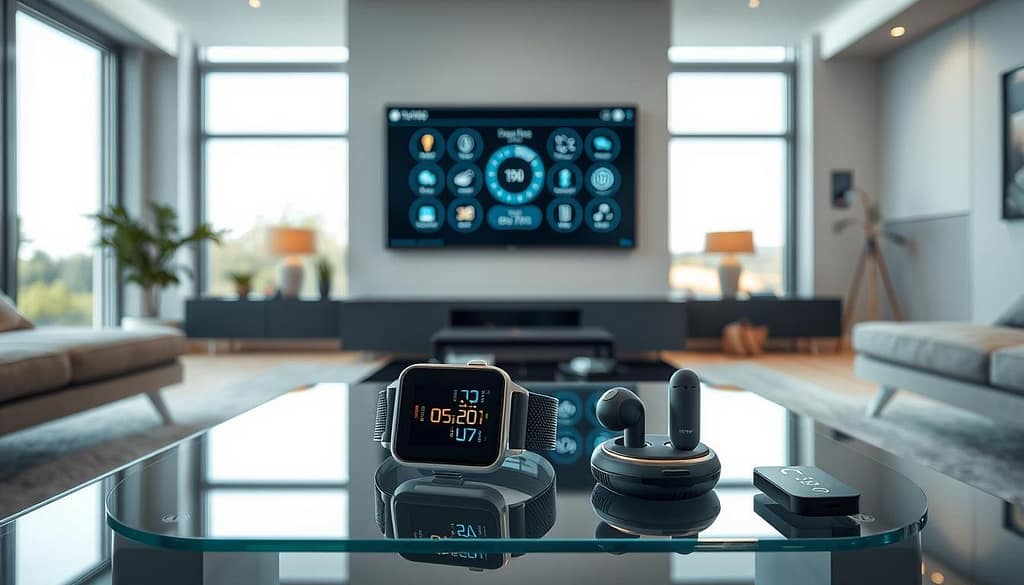
Wearables in Smart Homes are revolutionizing automation, playing an ultimate connectivity role by transforming smartwatches and fitness trackers into powerful command centers. These devices have evolved beyond personal health monitors, orchestrating entire household ecosystems. They create responsive environments tailored to daily routines.
Market projections indicate a rapid growth in this sector. The wearable technology market is expected to grow from $70.30 billion in 2024 to a staggering $152.82 billion by 2029. Global shipments are forecasted to reach 538 million units, showing a significant increase in consumer adoption.
Connected devices such as Apple Watch and Samsung Galaxy Watch are bridging the gap between human intent and automated responses. These IoT wearables create seamless experiences, anticipating user needs before they are consciously expressed. This marks a shift from standalone gadgets to interconnected ecosystems.
This home integration technology responds intelligently to user presence, behavior, and biometric data. It results in a living environment that adapts automatically to individual preferences and daily routines.
Table of Contents
- 1 Wearables in Smart Homes: Driving Home Automation
- 2 Wearables in Smart Homes: Redefining Connected Living
- 3 Wearables in Smart Homes: Biometric Home Control Benefits
- 4 Wearables in Smart Homes: Enhanced Security via Authentication
- 5 Wearables in Smart Homes: Voice and Gesture Control
- 6 Wearables in Smart Homes: Energy-Saving Occupancy Insights
- 7 Wearables in Smart Homes: Health-Driven Automation
- 8 Wearables in Smart Homes: Privacy and Security Concerns
- 9 Wearables in Smart Homes: Future Integration Trends
- 10 Wearables in Smart Homes: Powering Future Connectivity
- 11 Wearables in Smart Homes: Powering Future Connectivity
- 12 Wearables in Smart Homes: Frequently Asked Questions
Key Takeaways
- Wearable devices are transforming from health monitors into central home automation controllers
- The wearable technology market will more than double from $70.30 billion to $152.82 billion by 2029
- Smartwatches and fitness trackers create seamless integration between human behavior and automated home responses
- Connected devices anticipate user needs through biometric data and behavioral patterns
- IoT wearables serve as the missing link between personal intent and household automation
- Home integration technology is shifting from standalone devices to interconnected ecosystems
Wearables in Smart Homes: Driving Home Automation
Wearable technology integration has catalyzed an unprecedented shift in how homeowners interact with their automated living systems. This transformation represents more than simple convenience—it’s a complete redefinition of residential control paradigms.
Smartwatches and fitness trackers have evolved from basic notification devices into sophisticated command centers. These wearables now enable users to effortlessly manage multiple home functions without reaching for smartphones or wall panels. The home automation revolution is fundamentally changing daily routines.
Leading manufacturers are creating unified ecosystems where single gestures trigger complex sequences. An Apple Watch can simultaneously dim lights, adjust thermostats, and activate security systems. This level of smart home control was unimaginable just years ago.
The integration extends beyond simple commands. Modern wearables capture biometric data, location information, and behavioral patterns. This data enables homes to respond predictively to occupant needs, creating truly intelligent environments.
“IoT wearables offer unprecedented convenience in managing daily tasks, with smartwatches allowing users to control home appliances without touching smartphones.”
This post contains affiliate links, and we may earn a commission if you purchase through them.
Major partnerships between wearable manufacturers and smart home platforms are accelerating this evolution. Samsung’s Galaxy Watch integrates seamlessly with SmartThings, while Fitbit collaborates with Google Nest for complete home management.
This shift represents a move from manual control to context-aware automation. Homes now respond to heart rate changes, sleep patterns, and movement data collected by wearable sensors. The result is an intuitive living experience that adapts continuously to human needs.
The wearable technology integration trend is reshaping expectations for modern homes, making traditional control methods seem outdated and cumbersome.
Wearables in Smart Homes: Redefining Connected Living
Smart home ecosystems are undergoing a significant transformation with the integration of wearable device compatibility and advanced home technology platforms. Tech giants have formed strategic partnerships, turning simple fitness trackers and smartwatches into powerful hubs for home control. These devices now act as intelligent bridges between human physiology and the environment.
The fusion of health monitoring and home automation is creating personalized living experiences tailored to individual needs. Users can manage lighting, temperature, security, and appliances from their wrists. They also receive real-time updates on their home’s status.
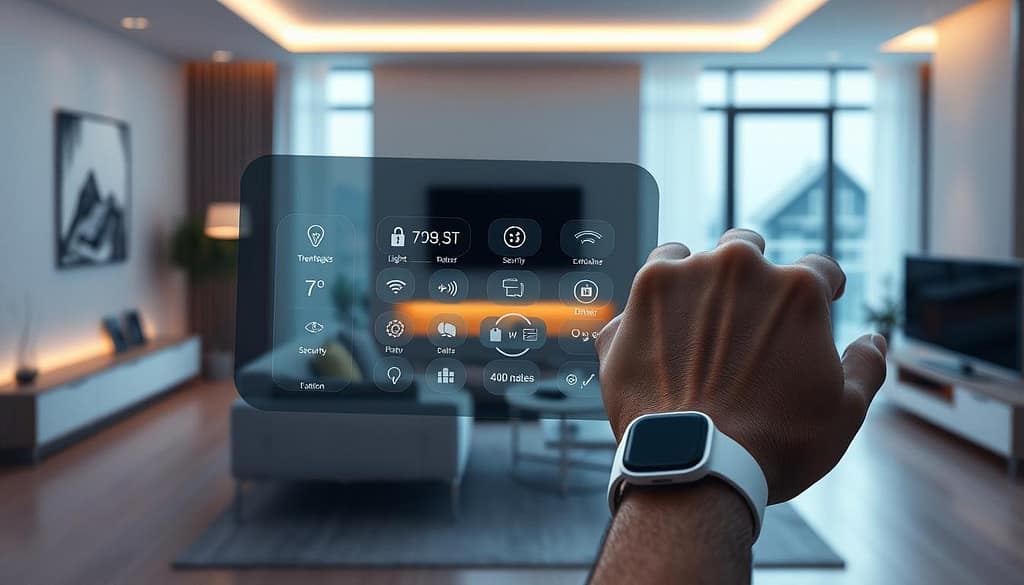
Apple Watch HomeKit Integration Excellence
The Apple Watch offers extensive HomeKit control through its user-friendly interface and Siri voice commands. Users can execute complex automation scenes with ease, whether through gestures or voice prompts. The device tracks vital signs like heart rate, ECG, and blood oxygen levels. It also manages home security alerts and energy consumption data.
The watch’s GPS navigation capabilities enable location-based home automation. It automatically adjusts settings when users arrive or leave their property.
Samsung Galaxy Watch SmartThings Ecosystem
The Samsung Galaxy Watch seamlessly integrates with the SmartThings platform, providing unified control over appliances, lighting, and security systems. It handles smartphone calls and notifications while managing home automation tasks. This connected living solution goes beyond basic controls, incorporating predictive automation based on user patterns.
Fitbit and Google Nest Collaborative Features
Fitbit devices now work in tandem with Google Nest products to optimize environmental conditions based on biometric data. Sleep patterns influence smart lighting schedules, while activity levels adjust climate control systems. This integration marks a shift towards health-centric home automation, where technology responds to physiological needs, not just manual commands.
| Platform | Primary Integration | Key Features | Automation Type |
|---|---|---|---|
| Apple Watch | HomeKit | Voice control, scene execution | Location-based |
| Galaxy Watch | SmartThings | Unified device control | Pattern-predictive |
| Fitbit | Google Nest | Biometric optimization | Health-responsive |
Wearables in Smart Homes: Biometric Home Control Benefits
Biometric home control marks a significant leap in the evolution of smart living spaces. Modern wearables, such as Apple Watch, Fitbit, and Samsung Galaxy Watch, are revolutionizing how homes interact with our needs. These devices continuously collect physiological data, enabling health-responsive environments to adapt automatically.
This integration transcends basic automation. Wearables monitor heart rate variability, sleep cycles, and stress levels in real-time. This data forms the basis for physiological automation, responding to our body’s actual needs, not just schedules.
Smart homes with biometric sensors can detect stress or overheating. They automatically adjust environmental conditions to enhance your comfort and health. This marks a significant shift from reactive to proactive home management.
Heart Rate Monitoring for Climate Optimization
Advanced wearables track cardiovascular patterns to trigger smart climate control responses. When your Apple Watch detects an elevated heart rate during exercise, it signals your HVAC system to cool more. The system learns your physiological patterns over time.
Fitbit devices track resting heart rate trends to optimize energy efficiency. During low activity, the system reduces heating and cooling intensity. This creates personalized comfort zones while minimizing energy consumption.
Sleep Pattern Integration with Smart Lighting
Sleep tracking capabilities enable sophisticated lighting automation. Samsung Galaxy Watch monitors sleep stages and circadian rhythms. This data orchestrates lighting scenarios that support natural sleep cycles.
As bedtime approaches, your wearable triggers gradual light dimming throughout your home. Morning wake-up routines simulate sunrise patterns based on your actual sleep quality. This biometric home control approach promotes healthier sleep habits and improved well-being.
Wearables in Smart Homes: Enhanced Security via Authentication
Wearable security systems are revolutionizing home protection with seamless authentication. They eliminate traditional vulnerabilities and offer real-time monitoring that learns user habits. Modern smartwatches and fitness trackers now serve as advanced digital keys, adding multiple layers of security.
These devices combine GPS tracking with emergency response features for a complete security package. Fall detection capabilities send alerts to emergency contacts, ensuring safety beyond basic access control.
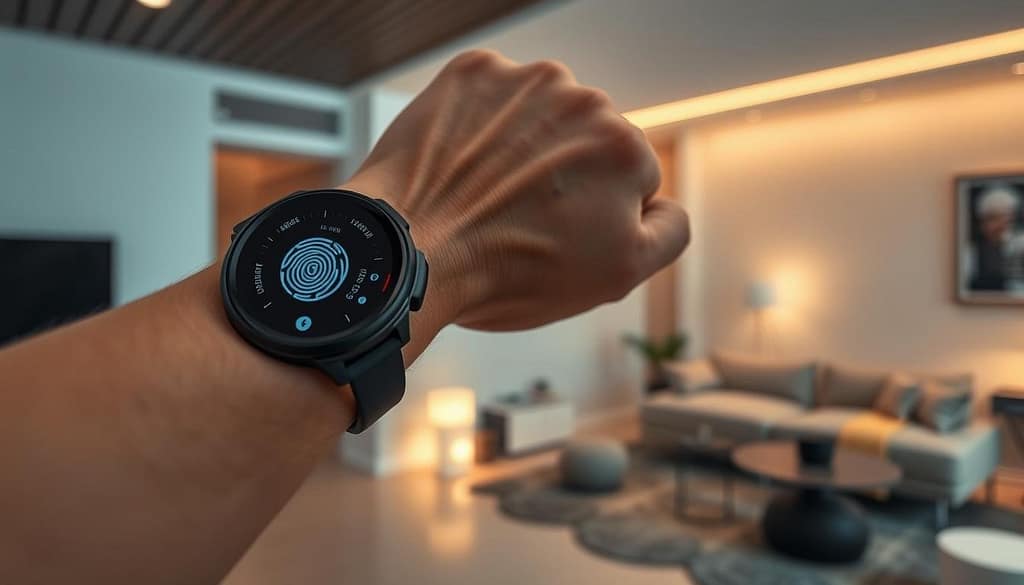
Proximity-Based Access Control Systems
Geofencing technology changes how we interact with our security systems. Smartwatches disarm alarms and unlock doors as users approach. This proximity access control offers personalized entry sequences without manual input.
Apple Watch and Samsung Galaxy devices lead in this field. They ensure secure connections with home networks and log detailed access records. Users get instant notifications about entry events, making home security transparent.
Biometric Security Protocols for Smart Locks
Advanced biometric authentication verifies identity through various physiological markers. Heart rate patterns, fingerprint scanning, and behavioral recognition create robust security. These systems evolve to match individual user characteristics over time.
Smart home security benefits from continuous authentication, not just single-point verification. Wearables monitor user presence, adjusting security levels based on occupancy patterns. This approach prevents unauthorized access while keeping convenience high.
| Authentication Method | Security Level | User Convenience | Battery Impact |
|---|---|---|---|
| Proximity Detection | Medium | High | Low |
| Biometric Scanning | Very High | Medium | Medium |
| Heart Rate Verification | High | High | Low |
| Multi-Factor Authentication | Maximum | Medium | High |
Wearables in Smart Homes: Voice and Gesture Control
Smart home control is on the cusp of a revolution, where natural interactions replace traditional device use. Wearable interface innovation is leading this shift, merging advanced sensors and AI into everyday wearables. This fusion enables users to connect with their surroundings in unprecedented ways.
Today’s wearables boast augmented reality, overlaying digital information onto the physical world. Smart glasses and high-end fitness trackers offer real-time data based on user experiences. This evolution paves the way for hands-free home control like never before.
Advanced Voice Command Processing
Apple Watch and Samsung Galaxy Watch outperform traditional smart speakers in voice control technology. These devices understand user location, activity, and physiological states. This context-aware processing enhances command accuracy and response appropriateness.
By integrating biometric data, smartwatches can adjust home automation based on stress and heart rate. Voice commands gain depth when combined with health metrics. Users enjoy personalized environmental controls that adapt to their physical state.
Motion-Based Interface Evolution
Gesture recognition systems in cutting-edge wearables interpret fine hand and finger movements as commands. Advanced sensors detect wrist rotations for lighting and finger gestures for volume. Users can activate security systems with pre-set hand signals, eliminating the need for physical interaction.
| Control Method | Response Time | Accuracy Rate | Context Awareness |
|---|---|---|---|
| Voice Commands | 0.5 seconds | 95% | High |
| Hand Gestures | 0.3 seconds | 92% | |
| Finger Motions | 0.2 seconds | 88% | Medium |
Wearables in Smart Homes: Energy-Saving Occupancy Insights
The fusion of smartwatches and fitness trackers with home automation systems opens up new avenues for energy efficiency optimization. These devices use GPS and geofencing to track user location and movement patterns with high accuracy. Modern wearables turn traditional energy systems into intelligent, predictive networks that forecast human behavior.
IoT wearables now monitor environmental data like UV exposure, air quality, and humidity. This data helps create detailed occupancy maps, enabling advanced smart energy management in homes. This shift moves from scheduled automation to real-time behavioral adaptation.
Intelligent Illumination Through Presence Detection
Occupancy detection technology allows for room-by-room lighting control that adjusts instantly to user presence. Fitbit and Apple Watch devices use GPS, accelerometer data, and Bluetooth beacons for sophisticated presence detection. They automatically turn on lights as users approach and dim them in empty rooms.
Advanced wearables cut energy use by up to 30% compared to traditional motion sensors. They create detailed occupancy maps that track movement patterns all day. Smart lighting systems learn from these patterns to optimize energy use proactively.
Climate Control Through Location Intelligence
Wearables offer detailed location intelligence for zone-based climate control systems. Smart thermostats work with wearable data to pre-cool or pre-heat areas based on user movement and schedule predictions. This location-based automation optimizes energy use by learning from daily routines.
| Wearable Device | Energy Savings | Detection Method | Response Time |
|---|---|---|---|
| Apple Watch | 25-30% | GPS + Bluetooth | 2-3 seconds |
| Fitbit Sense | 20-28% | Accelerometer + Wi-Fi | 3-5 seconds |
| Samsung Galaxy Watch | 22-32% | GPS + NFC | 1-2 seconds |
Wearable-driven energy management marks the future of intelligent homes. It optimizes consumption based on real-time human behavior, not just schedules.
This post contains affiliate links, and we may earn a commission if you purchase through them.
Wearables in Smart Homes: Health-Driven Automation
Wearable technology has revolutionized smart homes, turning them into therapeutic environments. These devices create health-responsive automation systems that adjust living conditions based on real-time biometric data. Modern fitness trackers and smartwatches now act as the central nervous system for environmental health control.
This integration goes beyond simple monitoring. It creates intelligent ecosystems that respond to individual health profiles. Advanced wearables seamlessly communicate with HVAC systems, lighting controls, and air purification devices to maintain optimal living conditions.
Air Quality Management Through Fitness Tracker Data
Advanced fitness trackers with environmental sensors detect pollutants, allergens, and harmful particles in real-time. These devices automatically trigger air quality management systems when respiratory hazards are identified. Users with asthma or other respiratory conditions receive immediate alerts about possible triggers.
The technology enables proactive environmental adjustments before health issues arise. Smart air purifiers activate based on wearable sensor data, while ventilation systems increase airflow when pollutant levels spike. This creates a protective barrier that helps people avoid high-risk exposure areas within their homes.
Circadian Rhythm Optimization via Smart Home Integration
Circadian rhythm technology in wearables tracks sleep patterns, light exposure, and biological rhythms with remarkable precision. This data orchestrates environmental adjustments that support natural sleep-wake cycles throughout the day.
Smart lighting systems respond to wearable sleep data by gradually adjusting color temperature and intensity. Circadian rhythm technology ensures that bright, blue-rich light energizes users during morning hours while warm, dim lighting promotes relaxation in the evening. Climate control systems simultaneously modify temperature and humidity levels to create optimal sleep conditions based on individual physiological needs.
Wearables in Smart Homes: Privacy and Security Concerns
The path to seamless wearable-smart home connectivity is fraught with integration challenges. These hurdles demand creative solutions. Modern makers are crafting advanced methods to tackle these issues. Their aim is to enhance the reliability and efficiency of connected living.
Industry leaders acknowledge that tackling technical hurdles requires a holistic approach. They invest significantly in R&D to conquer connectivity issues. Their ultimate goal is to achieve universal compatibility across various device ecosystems.
Battery Life and Connectivity Reliability Issues
The ongoing dialogue between wearables and smart home systems drains a lot of power. Energy harvesting techniques and refined communication protocols aim to extend device life. Low-power Bluetooth protocols are used to cut down energy use.
Edge computing reduces the need for constant data exchange. Smart data transmission strategies help conserve battery life while ensuring strong connectivity. These connectivity issues solutions enable devices to last longer between charges.
| Solution Type | Battery Impact | Connectivity Benefit | Implementation Cost |
|---|---|---|---|
| Low-Power Bluetooth | 40% reduction in drain | Stable within 30 feet | Low |
| Edge Computing | 25% power savings | Faster response times | Medium |
| Selective Transmission | 35% efficiency gain | Reduced network congestion | Low |
| Energy Harvesting | 15% extended life | Continuous operation | High |
Cross-Platform Compatibility Concerns
Ecosystem fragmentation arises when different wearable brands team up with various smart home platforms. Platform compatibility solutions include universal APIs and middleware technologies. These technologies enable Apple Watch users to manage Samsung SmartThings devices seamlessly.
Standardization efforts allow Fitbit to integrate with Google Nest systems. Universal integration platforms remove barriers between competing ecosystems. Industry collaboration fuels the creation of these all-encompassing solutions.
“The future of smart home integration hinges on establishing universal standards. These standards will enable any wearable device to communicate with any smart home system, regardless of the manufacturer.”
Wearables in Smart Homes: Future Integration Trends
Wearables are now key to home automation, making data protection a top priority. Smartwatches and fitness trackers, linked to smart homes, pose significant security challenges. They collect personal health and location data, needing comprehensive protection frameworks.
Wearable tech daily generates vast amounts of sensitive data. This includes heart rate, sleep patterns, and location tracking, creating detailed personal profiles. Such data, when transmitted through secure home networks, faces various threats.
Personal Data Protection Strategies
Top manufacturers employ multi-layered approaches for personal data safety. Local data processing minimizes cloud risks. Users have control over data sharing, ensuring privacy.
Adherence to GDPR, HIPAA, and CCPA regulations fuels innovation in data protection. Advanced anonymization techniques remove identifying data. Selective synchronization lets users pick health metrics for home system integration.
Encryption is applied at various stages of data transmission. Device-level encryption secures data before it’s sent. User consent systems offer clear control over data sharing.
Secure Communication Protocols
Advanced security protocols in wearables block unauthorized access. Tokenized authentication verifies each connection. Zero-trust architectures view every interaction as potentially suspicious.
Blockchain-based verification enhances data transmission security. Continuous monitoring detects unusual activity promptly. These measures ensure data integrity in the connected ecosystem.
| Security Protocol | Protection Level | Implementation Method | Compliance Standard |
|---|---|---|---|
| End-to-End Encryption | Maximum | AES-256 Algorithm | GDPR Compatible |
| Biometric Authentication | High | Fingerprint/Heart Rate | HIPAA Compliant |
| Local Data Processing | Enhanced | Edge Computing | CCPA Aligned |
| Tokenized Access | Strong | Dynamic Key Generation | Multi-Standard |
Wearables in Smart Homes: Powering Future Connectivity
Advanced machine learning algorithms in future wearable technology will transform intelligent home systems. The fusion of artificial intelligence with wearable devices opens up new avenues for seamless automation. This innovation will redefine how we interact with our living environments.
Next-generation wearables will harness machine learning to analyze vast amounts of personal data. This analysis enables predictive responses that meet user needs before they are even thought of. The outcome is an intelligent ecosystem that continuously adapts to individual preferences.
AI-Powered Predictive Home Automation
AI predictive automation marks a significant leap in smart home technology. Wearables will gather data on behavioral patterns, sleep cycles, and daily routines to create predictive models. These models will automatically adjust settings like lighting, temperature, and security hours before users arrive home.
Smart algorithms will learn from historical data and environmental factors. They will predict when you’ll wake up and pre-warm your coffee maker. The system will know your preferred room temperature based on your heart rate and activity level. This automation eliminates the need for manual adjustments.
Advanced Health Monitoring Integration Possibilities
Advances in materials science have led to flexible and stretchable electronic components in wearables. These innovations enable continuous health monitoring that was previously impossible. Advanced health integration will turn homes into proactive healthcare environments.
Future wearables will monitor biomarkers and detect early disease indicators in real-time. Smart home systems will adjust air quality, humidity levels, and lighting to support specific health conditions. Emergency protocols will activate automatically when critical health events are detected.
The combination of AI and advanced health integration creates therapeutic living spaces. These environments will provide medication reminders, optimize circadian rhythms, and coordinate with healthcare providers. This seamless integration between human physiology and environmental technology represents the ultimate goal of intelligent home automation.
Wearables in Smart Homes: Powering Future Connectivity
The wearable technology market is growing fast, with smartwatches and fitness trackers becoming key parts of our homes. These devices have evolved from simple notification tools to complex control centers. They connect human intent with automated actions.
Wearable integration offers more than just convenience. Today, smart homes react to biometric data, location patterns, and user preferences instantly. This transformation makes homes that anticipate needs before they are even asked for.
The evolution of home automation is a major shift in residential technology. Apple Watch users can control HomeKit devices easily, while Samsung Galaxy Watch owners manage SmartThings systems without hassle. Fitbit devices now work with Google Nest products to enhance comfort and efficiency.
Privacy and technical hurdles are significant concerns. Battery life and compatibility issues need constant focus from makers and developers.
The future of smart homes looks even more integrated. AI systems will learn from wearable data to create truly intelligent spaces. Health monitoring will expand to include environmental adjustments based on our natural rhythms and stress levels.
This technological convergence makes wearable devices central to home innovation. The shift from reactive to predictive home automation signals a new era. In this era, human wellness and environmental efficiency blend seamlessly.
This post contains affiliate links, and we may earn a commission if you purchase through them.
Wearables in Smart Homes: Frequently Asked Questions
Wearables in Smart Homes connect via platforms like Apple HomeKit, Samsung SmartThings, and Google Nest, enabling control of functions like lighting and climate. Apple Watch manages HomeKit scenes, Samsung Galaxy Watch pairs with SmartThings, and Fitbit with Google Nest adjusts environments based on health data for a unified experience.
Can Wearables in Smart Homes adjust temperature based on heart rate?
Wearables in Smart Homes, like Apple Watch and Fitbit, adjust home temperature using heart rate data, cooling during exercise and warming at rest, surpassing traditional schedules.
What security benefits do Wearables in Smart Homes offer for access control?
Wearables in Smart Homes enhance security with proximity-based and biometric authentication, unlocking doors and disarming systems. Apple Watch uses biometric signatures, offering access logs and real-time monitoring for robust protection.
How do Wearables in Smart Homes boost energy efficiency?
Wearables in Smart Homes use GPS and sensors to track location and behavior, optimizing lighting and climate control by room, reducing energy use by up to 30%.
Can Wearables in Smart Homes use voice and gesture control?
Wearables in Smart Homes enable voice and gesture control, leveraging location and activity for precise commands, surpassing stationary speakers with next-gen hand movement recognition.
How do Wearables in Smart Homes optimize air quality and lighting?
Wearables in Smart Homes, like fitness trackers, detect pollutants to adjust HVAC systems and maintain clean air, while optimizing lighting for sleep cycles based on health data.
What challenges do Wearables in Smart Homes face in integration?
Wearables in Smart Homes face battery life and cross-platform compatibility challenges, with manufacturers advancing energy harvesting and interoperability solutions.
How secure are Wearables in Smart Homes for health data?
Wearables in Smart Homes use encryption and local processing, complying with GDPR, HIPAA, and CCPA, with zero-trust and blockchain for enhanced data security.
Which brands of Wearables in Smart Homes pair best with platforms?
Wearables in Smart Homes, like Apple Watch with HomeKit, Samsung Galaxy Watch with SmartThings, and Fitbit with Google Nest, optimize control and health, with brands enhancing universal compatibility.
What’s the future of AI with Wearables in Smart Homes?
Wearables in Smart Homes will leverage AI to predict needs via habits and health, using sensors and smart textiles for proactive, personalized home automation.