
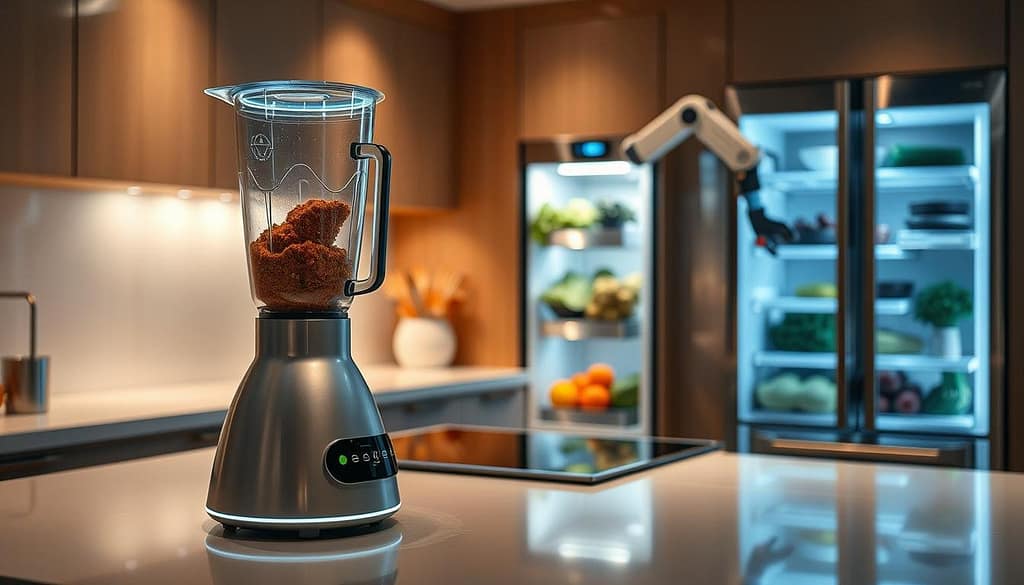
The Evolution of Everyday Gadgets has transformed our homes over the past century. From manual tools requiring hands-on effort to smart devices controlled by voice or apps, this shift highlights the rise of intelligent technology.
This evolution is evident in how a simple lamp becomes a smart lighting system, adjusting brightness, color, or syncing with music. Similarly, old clocks have evolved into smart devices that display weather, control other gadgets, and adapt to daily routines.
The evolution of everyday gadgets shows how technology has grown. Now, thermostats know when you’re leaving and adjust the heat for you. This shows how artificial intelligence has become part of our daily lives.
This change is not just about making things easier. Smart devices talk to each other, making our homes more efficient and fun. From simple tools to smart systems, it shows how fast we’re innovating.
Table of Contents
- 1 The Evolution of Everyday Gadgets: From Mechanical to Digital
- 2 The Evolution of Everyday Gadgets: Smart Lighting Transformation
- 3 The Evolution of Everyday Gadgets: Timekeeping Innovations
- 4 The Evolution of Everyday Gadgets: Smart Thermostat Advances
- 5 The Evolution of Everyday Gadgets: Kitchen Tech Innovations
- 6 The Evolution of Everyday Gadgets: Smartphone Communication
- 7 The Evolution of Everyday Gadgets: Audio-Visual Innovations
- 8 The Evolution of Everyday Gadgets: Smart Security Solutions
- 9 The Evolution of Everyday Gadgets: Robotic Cleaning Advances
- 10 The Evolution of Everyday Gadgets: Driving Forces Behind Innovation
- 11 The Evolution of Everyday Gadgets: Consumer Adoption Trends
- 12 The Evolution of Everyday Gadgets: Sustainability Impacts
- 13 The Evolution of Everyday Gadgets: Future Tech Trends
- 14 The Evolution of Everyday Gadgets: Final Innovation Insights
- 15 FAQ
Key Takeaways
- Household devices have transformed from manual mechanical systems to intelligent, automated solutions
- Modern gadgets can learn user preferences and adapt their functionality according
- Smart devices now communicate with each other to create integrated home ecosystems
- Voice commands and smartphone apps have replaced traditional manual controls
- Energy efficiency has dramatically improved through intelligent automation features
- Artificial intelligence integration has become standard in consumer household products
The Evolution of Everyday Gadgets: From Mechanical to Digital
The move from mechanical gadgets to digital ones is a huge leap in consumer electronics history. Early devices needed springs, gears, and pulleys and lots of human help. They were hard to use, like winding clocks or changing the temperature.
By the late 1800s, electricity came to American homes. This was a big change. Electric motors made things easier, needing no human help. This was the start of more advanced appliances.
The 1970s and 1980s saw the rise of digital tech. Microprocessors made devices smarter. They could remember things and change how they worked.
Now, we have smart device innovations that are the top of this journey. Today’s gadgets use machine learning, wireless tech, and cloud computing. They work together and learn from us, making our lives easier.
| Era | Technology Type | User Interaction | Key Features |
|---|---|---|---|
| Pre-1880s | Mechanical | Manual Operation | Springs, gears, physical controls |
| 1880s-1970s | Electric | Switch Activation | Motors, consistent power, timers |
| 1970s-2000s | Digital | Programmable Settings | Microprocessors, memory, displays |
| 2000s-Present | Smart Connected | Voice/App Control | AI, wireless, cloud integration |
This journey shows how each new tech builds on the last. It’s changed our lives for the better. Moving from mechanical to digital has made our homes more convenient and personal.
The Evolution of Everyday Gadgets: Smart Lighting Transformation
The evolution has transformed home lighting systems dramatically. From hazardous flames to smart systems responding to voice commands, this shift reflects how technology evolves to meet user demands for safety and convenience.
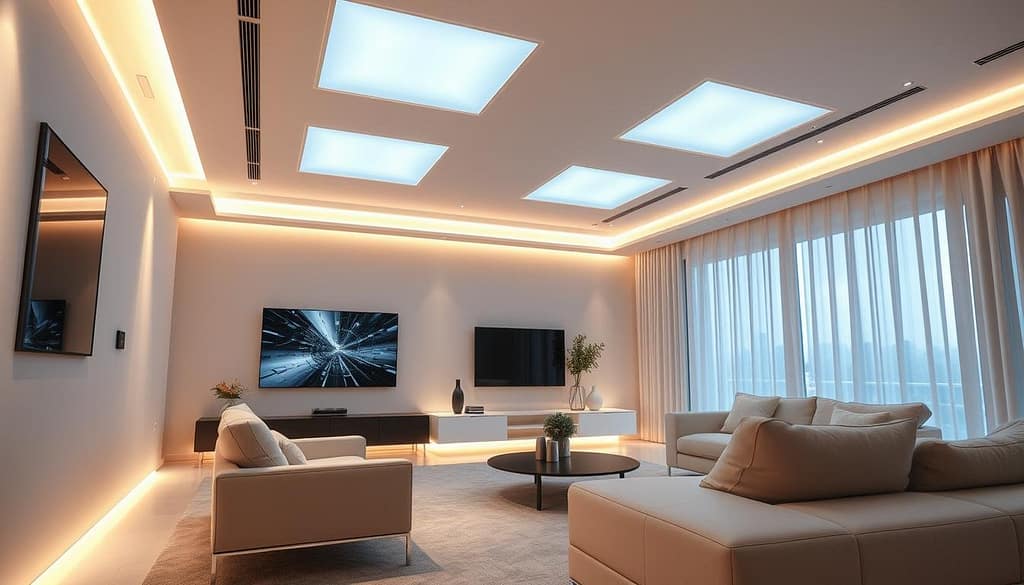
The Evolution of Everyday Gadgets in modern lighting spans three key stages, each enhancing safety, efficiency, and usability. These advancements mirror broader trends in smart home technology development, integrating seamless control and energy savings.
Early Illumination Methods and Edison’s Breakthrough
For a long time, homes used candles and oil lamps. These early lights were dim and dangerous. Then, gas lighting came in the 1800s, lighting up cities and homes.
In 1879, Thomas Edison made the electric light bulb. It was safe, clean, and easy to control. Edison’s bulb made old lighting methods seem outdated.
Edison’s invention led to more electricity in homes. By 1925, half of American homes had electric lights.
Energy-Efficient Lighting Innovations
In the 1930s, fluorescent lighting came along. It used 75% less power than Edison’s bulbs and lasted longer. Offices quickly adopted it.
Then, in the 1990s, LED lights became popular. They use even less energy than fluorescent bulbs. LEDs also don’t get hot and last up to 25 years.
LED lights have many benefits:
- They use 90% less energy than old bulbs
- They last up to 25 years
- They turn on instantly
- They come in different colors
Smart Lighting and Connected Ecosystems
In 2012, Philips Hue started the smart lighting trend. These bulbs change colors, dim, and sync with music. You can control them with apps or voice assistants.
Smart lights offer unprecedented customization options. They can mimic a sunrise to help you sleep better. They also turn on when you enter a room.
Today, smart lighting works with other smart home devices. It talks to thermostats, security systems, and more. This is the latest step in lighting’s evolution.
The Evolution of Everyday Gadgets: Timekeeping Innovations
Timekeeping devices have changed a lot over the years. They’ve evolved from simple tools to smart systems that fit into our digital lifestyle changes. This change has spanned centuries, from mechanical clocks to smart devices that help us stay connected and on schedule.
Today, timekeeping is more than just telling time. It’s about being the center of our homes, tracking our health, and sending us personalized updates. These devices adjust to our lives and routines.
Mechanical Pendulum Clocks and Swiss Precision
Swiss clockmakers made mechanical pendulum clocks perfect over many years. These clocks needed to be wound often and looked after to keep good time.
The Swiss set high standards in clockmaking. Their work influenced many industries. Mechanical movements were the top of analog engineering, with complex gears that worked well for years.
Seiko Quartz Movement and Digital Display Innovation
Seiko changed timekeeping with quartz movement in 1969. This innovation made clocks more accurate and didn’t need winding as often. It showed early signs of tech miniaturization.
Digital displays made clocks easier to use. They showed time clearly and added features like alarms. This change made a big difference in how we use timekeeping devices.
Atomic Clocks and GPS Time Synchronization
Atomic clocks are super accurate, keeping time within nanoseconds. They help with everything from money transactions to navigation. This accuracy is key for our modern world.
GPS keeps all connected devices in sync. Smart clocks now do more than just tell time. They give us weather updates, calendar reminders, and control our homes.
Today, smartwatches and clocks track our health and control our homes. They send us updates that matter to us. This shows how tech miniaturization makes essential tools part of our digital lives while keeping their core function.
The Evolution of Everyday Gadgets: Smart Thermostat Advances
The way we control temperature at home has changed a lot. What used to be simple switches are now smart devices. Today’s thermostats use AI and can learn from us, thanks to new technology.
These changes show how gadgets have gotten smarter over time. Going from manual to automated control shows how tech can make our lives better.

Warren Johnson’s Electric Thermostat and Early Automation
In 1883, Warren Johnson created the first electric thermostat. This invention brought automated temperature control to buildings. It made heating systems easier to manage.
The early thermostat used a bimetallic strip that changed shape with temperature. This simple idea could turn heating on and off. This idea started all modern climate control.
Johnson’s thermostat was a big step in building automation. It kept temperatures steady without needing someone to adjust it. This was a huge improvement in energy use.
Honeywell Programmable Models and Energy Savings
Honeywell’s programmable thermostats were a big step forward. They let users set different temperatures for different times. This saved a lot of energy by using heating and cooling wisely.
These thermostats could lower energy use when no one was home. Users could set lower temperatures when away and higher when back. This cut energy costs by up to 23% a year.
Honeywell’s models had digital displays and many options. They could remember weekly schedules and even special settings for holidays. This technology was a big leap towards today’s smart devices.
Nest Learning Thermostat and AI-Driven Climate Control
The Nest Learning Thermostat changed climate control with AI. It learns how we like our home and adjusts for comfort and savings. AI makes climate control easy and efficient.
Today’s smart thermostats know when we’re home with sensors and phone data. They even talk to the weather to get ready for changes. They work with other smart home devices for better control.
Users can control their home’s temperature from anywhere with apps. These devices also give energy reports and help the grid during busy times. This makes our homes and the grid work better together.
| Thermostat Era | Key Features | Energy Efficiency | User Interaction |
|---|---|---|---|
| Manual Systems (Pre-1883) | Manual valve control, constant monitoring required | Low efficiency, frequent temperature swings | Continuous manual adjustment needed |
| Electric Thermostats (1883-1950s) | Bimetallic strip automation, basic on/off control | Moderate efficiency, consistent temperatures | Set-and-forget operation |
| Programmable Models (1960s-2000s) | Digital displays, weekly scheduling, multiple zones | High efficiency, 15-23% energy savings | Initial programming, occasional adjustments |
| Smart Thermostats (2010s-Present) | AI learning, remote control, ecosystem integration | Maximum efficiency, predictive optimization | Minimal interaction, automatic adaptation |
The Evolution of Everyday Gadgets: Kitchen Tech Innovations
The heart of every home has seen big changes in kitchen tech. The evolution of everyday gadgets is clear when we look at how we prepare and store food. These changes have made cooking easier and kitchens more efficient.
Ice Boxes to General Electric Monitor Top Refrigerators
Old American homes used wooden ice boxes that needed ice deliveries. These early coolers had little space and uneven temperatures. Food spoilage was a big worry for families trying to keep food fresh.
General Electric changed everything in 1927 with their Monitor Top fridge. This new fridge brought reliable electric cooling that ended ice delivery needs. It had a sealed system that kept food fresh longer.
Raytheon Radarange to Modern Microwave Sensors
The Raytheon Radarange brought military tech to kitchens in the 1940s. This big appliance weighed over 750 pounds and cost thousands. Electromagnetic radiation cooking was new but hard for most homes to use.
Today’s microwaves have come a long way. They have smart moisture sensors that adjust cooking times. This makes cooking easy and perfect every time.
Samsung Family Hub and Connected Kitchen Appliances
Samsung’s Family Hub fridges are at the top of kitchen tech. They have touchscreen interfaces and internal cameras for managing food. Users can see what’s inside and get reminders when food expires.
Now, kitchen systems work together smoothly. Induction cooktops talk to smart ovens and dishwashers adjust based on soil sensors. This shows how the evolution of everyday gadgets keeps changing cooking.
Artificial intelligence helps these appliances learn what we like and suggest recipes. Automated grocery ordering and meal planning cut down on waste and make cooking easier. These updates make cooking fun and simple for busy families.
The Evolution of Everyday Gadgets: Smartphone Communication
Communication devices have seen huge changes over time. They’ve moved from simple tools to complex computers. This change has greatly affected how we talk, share info, and do business globally.
For over 150 years, new tech has kept improving. Each new discovery made the next tool even better.

Alexander Graham Bell’s Telephone to Rotary Systems
In 1876, Alexander Graham Bell invented the first telephone. It let people talk over long distances for the first time. His device turned sound into electrical signals.
The rotary dial came in the early 1900s. It let users dial numbers directly. Rotary phones needed users to turn a circular disc for each number. This was slow compared to today.
Motorola DynaTAC and Cellular Network Development
The Motorola DynaTAC 8000X came out in 1983. It was big, heavy, and expensive. Only rich people could afford it.
Cellular networks made mobile phones common. The first networks were for voice calls. Later, they added data. This let millions talk without wires.
“The idea that you could have a phone that wasn’t connected to the wall was revolutionary.”
Apple iPhone and Smartphone Ecosystem Integration
The iPhone launched in 2007. It made phones into powerful computers. Steve Jobs combined many features into one device.
Today, smartphones do more than call. They control smart homes, make payments, track health, and entertain. They connect to the cloud and apps, changing our lives.
| Communication Era | Key Innovation | User Impact | Adoption Timeline |
|---|---|---|---|
| Telegraph Era | Electrical message transmission | Long-distance communication | 1840s-1920s |
| Telephone Era | Voice transmission | Real-time conversation | 1876-1980s |
| Mobile Era | Wireless connectivity | Communication freedom | 1983-2007 |
| Smartphone Era | Multi-function integration | Digital lifestyle management | 2007-Present |
Today, communication devices have changed fast. Each new tech builds on the last. This has changed how we interact with each other worldwide.
The Evolution of Everyday Gadgets: Audio-Visual Innovations
From Marconi’s wireless signals to today’s streaming platforms, entertainment systems have seen a lot of change. These devices have changed how families watch and listen to media at home. The move from simple audio receivers to smart multimedia hubs is a key part of consumer electronics history.
Now, entertainment technology combines many functions into one device. Smart systems learn what you like and suggest content for you. This shows how gadgets in our homes have changed over time to meet our needs.
Wireless Broadcasting Revolution
Guglielmo Marconi’s radio technology was the first big entertainment medium. His system could send signals far and wide, reaching many people at once. This was the start of all broadcasting technologies.
Later, transistors made radios smaller and sound better. Portable radios became popular all over the world. The switch from vacuum tubes to transistors was a big step in consumer electronics history.
Television and Color Broadcasting Breakthrough
RCA’s work on television brought moving pictures and sound into American homes. Early black-and-white TV shows were a hit with audiences. Color TV made watching even better and made TV the top entertainment choice.
Cable and satellite TV added more channels. Digital tech made signals clearer and more reliable. These changes led to better picture quality and interactive TV.
Streaming Platforms and Connected Entertainment
Roku streaming players are a big step in entertainment today. They let you watch what you want, anytime, thanks to the internet. Smart TV platforms offer many streaming services, games, and more.
Today’s systems can understand voice commands and work with smart home devices. They use AI to guess what you might want to watch. 4K and HDR give pictures that are even clearer than before.
This journey from simple radio to smart entertainment systems shows how we’ve always wanted more. Today’s systems offer personal experiences that go beyond old TV shows.
The Evolution of Everyday Gadgets: Smart Security Solutions
The evolution of home security systems has seen huge leaps in smart device innovations. Today, we have advanced security tech that changes how we protect our homes and families. This journey has spanned over a century, filled with breakthroughs and improvements.
Now, our security solutions can do things we couldn’t imagine before. Connected devices offer real-time monitoring and alerts from anywhere. This shows how far we’ve come in protecting our homes.
Traditional Security Mechanisms
The Yale Lock Company started it all in 1868. Their mechanical locks set the standard for reliability and durability. These locks worked without electricity or connections.
Mechanical locks had many benefits:
- No need for power or batteries
- Long-lasting materials and craftsmanship
- Easy to use without complex tech
- Effective physical barrier
Yale’s pin tumbler design became the top choice for home security. Their work made locks that homeowners could rely on.
Electronic Systems and Motion Detection
ADT changed the game with electronic security systems in the 1970s. These systems had motion sensors, door contacts, and monitoring services. Smart device innovations allowed for alerts to security and police.
These systems covered more than just doors. Motion detectors could track movement and trigger responses. This was a big step towards active security.
AI-Powered Recognition Technology
Ring video doorbells are the latest in home security. They have high-definition video and two-way audio. Artificial intelligence powers facial recognition to tell family from strangers.
Today’s smart device innovations give us control and visibility like never before. We get alerts on our phones and can watch our homes from afar. Cloud storage keeps video records safe, and AI gets better at recognizing faces.
Now, we have systems that link cameras, smart locks, and sensors together. These networks offer detailed logs and quick responses to threats.
The Evolution of Everyday Gadgets: Robotic Cleaning Advances
Modern cleaning technology has changed how we keep our homes clean. We’ve moved from manual tools to smart robots. These new devices clean with little help from us and do a great job.
For over a century, cleaning tools have gotten better. Each new invention makes cleaning easier and faster. Now, we can do away with boring household chores.
Electric Suction Pioneers
The Hoover Model O, launched in 1908, started the modern vacuum era. It brought electric suction power to American homes. Before, people used manual tools to clean.
Early electric vacuums set the stage for today’s cleaning tech. They used motorized suction and filtration systems. The Model O made cleaning faster and better at picking up dust.
Bagless Revolution
Dyson’s cyclonic tech made vacuums better by getting rid of bags. This kept consistent suction power while cleaning. Old vacuums lost power as bags got full.
Bagless vacuums saved money over time. You could see how much dirt they picked up. This made cleaning more visible and satisfying.
The cyclonic design used centrifugal force to clean. It kept filters clear and airflow strong. This also cut down on waste from disposable bags.
The iRobot Roomba brought true cleaning automation to homes. These robots use smart sensors and maps. They clean without us watching.
Today’s robots make maps of our floors and avoid things. They even charge themselves and work on schedules. Some can even mop and know what floor they’re on.
Now, some robots can empty their own dust bins. They work with smart homes for a seamless cleaning experience. This makes cleaning easier than ever.
The Evolution of Everyday Gadgets: Driving Forces Behind Innovation
Three main technological forces have pushed modern gadget development far beyond what was thought possible. These forces have turned simple items into smart systems. They adapt, learn, and talk to users and other devices easily.
The mix of better semiconductors, wireless tech, and AI has sparked a wave of innovation. Each step forward builds on the last, leading to faster, cheaper, and simpler devices for everyone.
Moore’s Law and Semiconductor Miniaturization
Gordon Moore said transistors would double in density every two years. This idea has led to tiny electronic parts. Now, devices as small as light bulbs can pack a lot of power.
Today, phones have more power than huge computers from the 1970s. This miniaturization lets us add smarts to simple things. It turns basic items into smart, interactive systems.
Wi-Fi Standards and Internet of Things Integration
Strong wireless tech has made it easy for devices to talk to each other. Wi-Fi has grown from simple data sharing to handling hundreds of devices at once in a home.
This tech lets us control devices from afar, automate tasks, and access the cloud. Devices can share info, work together, and get better over time.
Machine Learning Algorithms and Predictive Analytics
AI has made devices learn and adapt. They get better based on how we use them and our surroundings. This means thermostats can guess when to heat up, security systems can spot odd behavior, and entertainment systems can suggest shows we might like.
With predictive analytics, devices can guess what we need before we ask. This makes using them easier and saves energy in our homes.
| Driving Force | Key Innovation | Impact on Household Devices | Timeline |
|---|---|---|---|
| Semiconductor Miniaturization | Transistor density doubling | Powerful computing in small devices | 1965-Present |
| Wi-Fi Standards | Wireless connectivity protocols | Device communication and cloud access | 1997-Present |
| Machine Learning | Predictive algorithms | Adaptive and anticipatory behavior | 2010-Present |
The Evolution of Everyday Gadgets: Consumer Adoption Trends
Market dynamics show how digital lifestyle changes affect household tech adoption. From lab to kitchen, the journey is well understood by makers and marketers.
People don’t just buy gadgets randomly. They look for convenience, savings, or what friends think.
Technology Adoption Lifecycle and Market Penetration
The tech adoption lifecycle shows how new tech reaches different groups. Early adopters are tech fans who pay more for the latest, even with small issues.
The early majority waits for products to be proven and affordable. They look for good reviews and lower prices before buying. This is when sales really take off.
Latecomers buy when tech becomes a must-have. They wait until old tech is no longer available. This shows how digital lifestyle changes reach everyone.
Price Elasticity and Mass Production Economics
Mass production economics boost adoption. More demand means lower costs for each item.
Smartphones are a great example. They were once very expensive but became affordable quickly. Lower prices make advanced tech available to more people.
Easy-to-use products sell faster. Clear benefits and simple design help tech reach more people. This shows the importance of both innovation and ease of use in digital lifestyle changes.
The Evolution of Everyday Gadgets: Sustainability Impacts
Today, making tech that’s good for the planet is key. New gadgets come out fast, but they also bring big challenges. Companies must make products that are both cool and eco-friendly.
People want gadgets that save energy and resources. This changes how products are made and thrown away. Tech miniaturization helps use less material and makes devices better.
Energy Star Standards and Efficiency Improvements
Energy Star has made homes more energy-efficient. It sets high standards for appliances. Refrigerators, washing machines, and HVAC systems use way less power than before.
LED bulbs are a big win for saving energy. They use 80% less energy than old bulbs and last longer. Smart thermostats also help by adjusting heat and cool based on when you’re home.
New motor designs and better insulation cut down energy use. Devices now adjust power based on how you use them. These changes help both your wallet and the planet.
E-Waste Management and Circular Economy Initiatives
More gadgets mean more e-waste. Old devices often end up in landfills. This is bad for the environment and wastes valuable resources.
Circular economy ideas help fix this. Companies offer trade-in programs and make parts that can be swapped out. Fixing gadgets instead of tossing them is another smart move.
Recycling old tech parts is also key. Some products are made to be easily broken down. This cuts down on waste and saves resources.
The Evolution of Everyday Gadgets: Future Tech Trends
The next smart home tech will change how we live with advanced networking and new standards. These new ideas will make homes that learn and adapt to our lives. They will do so with amazing accuracy.
Future devices will be smarter and work together better. Artificial intelligence will help them understand us and guess what we need before we ask.
5G Connectivity and Edge Computing Applications
5G networks will change how devices talk to each other. This fast connection lets many smart devices work together smoothly.
Edge computing brings power to your devices. They won’t need to send data to far-off servers. This means they can act faster and keep your data safer.
With 5G, devices can talk to each other in real-time. Your fridge, thermostat, and security system can share info instantly. They work together to save energy and make your home more comfortable.
Matter Protocol and Universal Smart Home Standards
The Matter protocol makes devices from different brands work together. This standard means any smart device can connect with any system, no matter who made it.
This makes it easy to mix devices from Apple, Google, Amazon, and Samsung. You won’t have to worry about them not working together. This helps devices evolve faster in every part of your home.
Setting up new devices will be much easier with these standards. They will connect to your network automatically. You’ll use simple interfaces that are easy for everyone to use.
| Technology Trend | Current Capability | Future Enhancement | Timeline |
|---|---|---|---|
| 5G Connectivity | Limited home coverage | Ultra-low latency coordination | 2025-2027 |
| Edge Computing | Cloud-dependent processing | Local AI decision-making | 2024-2026 |
| Matter Protocol | Brand-specific ecosystems | Universal device compatibility | 2024-2025 |
| Voice Control | Basic command recognition | Natural conversation interfaces | 2026-2028 |
Advanced sensors will watch over your home, checking air quality and health. They’ll even predict when things need fixing. Your home will help keep everything running smoothly.
Energy management will get even better. Smart homes will adjust energy use based on prices and weather. They’ll work with solar panels and electric cars to make your home green.
The Evolution of Everyday Gadgets: Final Innovation Insights
The way we live at home has changed a lot thanks to gadgets. What started as simple tools now connects our homes into smart systems. These systems guess what we need and change to fit our likes.
Edison’s bulbs and Philips Hue lights show how far we’ve come. From old clocks to GPS clocks, each step forward made things better. Nest’s smart thermostats show how far we’ve come from simple thermostats.
Now, our homes have Samsung Family Hub fridges and iRobot Roomba vacuums. Ring doorbells keep us safe with smart monitoring. These gadgets do more than just work; they make our lives better.
Wi-Fi, machine learning, and IoT make our homes smart. They learn from us and get better on their own. With 5G and Matter, we’re in for even more changes.
This tech change shows our constant push to make life better. AI and edge computing will make our homes even smarter. The future of home tech looks very exciting.
FAQ
How has The Evolution of Everyday Gadgets impacted home automation?
The Evolution of Everyday Gadgets has driven home automation from manual switches to voice-activated systems like Amazon Alexa, enabling seamless control of lighting, thermostats, and appliances, as per TechRadar.
What role does The Evolution of Everyday Gadgets play in energy efficiency?
The Evolution of Everyday Gadgets enhances energy efficiency through smart devices like Nest thermostats, which optimize heating and cooling based on user habits, reducing energy use by up to 20%, according to CNET.
How does The Evolution of Everyday Gadgets improve home security?
The Evolution of Everyday Gadgets has transformed home security with smart locks and cameras like Ring, offering remote monitoring and biometric access, as noted in IEEE’s tech reviews.
Can The Evolution of Everyday Gadgets support health-focused environments?
The Evolution of Everyday Gadgets supports health-focused homes via devices like smart air purifiers that adjust based on air quality, promoting wellness, as highlighted in TechRadar’s smart home guides.
What future innovations will The Evolution of Everyday Gadgets bring to homes?
The Evolution of Everyday Gadgets will introduce AI-driven devices that predict user needs, such as proactive lighting and climate control, shaping smarter homes, per IEEE’s future tech insights.